
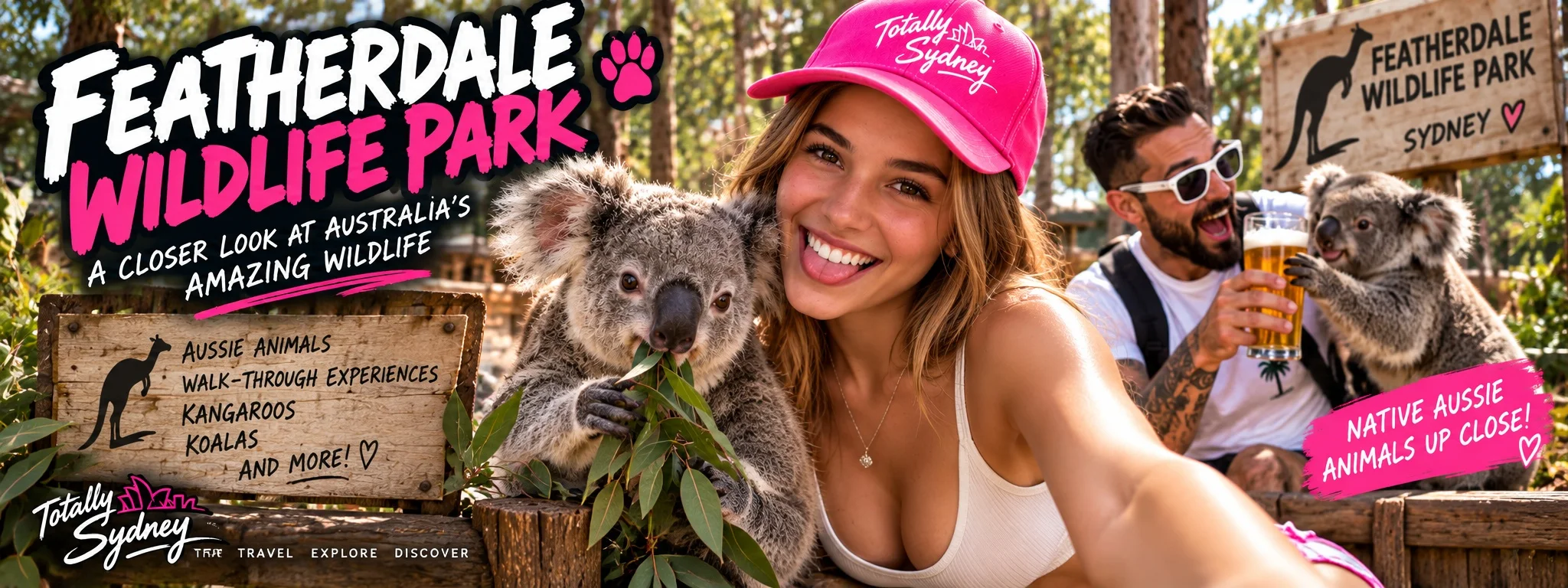
Is Featherdale worth the trip from central Sydney?
Featherdale Sydney Wildlife Park is one of the easiest places around Sydney to build a day around Australian native animals rather than a giant international zoo collection. It sits at Doonside in Western Sydney, near Blacktown, and its appeal is very different from Taronga Zoo: Featherdale is smaller, flatter, more intimate and much more focused on getting you close to koalas, kangaroos, wallabies, reptiles, birds and other Australian wildlife.
If your dream Sydney wildlife photo is a koala at arm's length or a kangaroo wandering through a walk-through habitat, Featherdale is the stronger fit. If you want a full-day zoo with harbour panoramas, elephants, giraffes and a much wider international species list, Taronga remains the better all-rounder.
Featherdale's own visitor information currently says the park holds around 2,000 Australian animals, includes about 50 koalas across six habitat areas, and is designed around close-up native-wildlife viewing rather than a huge landscaped-zoo circuit. That compactness is a strength if your Sydney itinerary is already busy.
🐨 TATS Man planning call
Do not promise yourself a koala cuddle. In New South Wales visitors cannot simply hold a koala for a tourist photo. Featherdale's current Personal Koala Experience lets you get close, pat a koala under keeper supervision and take home a photo package. Book the encounter you actually want rather than relying on vague “koala experience” wording from old travel blogs.
Current opening hours and how long to allow
Featherdale currently lists normal opening hours of 8am to 5pm daily, with reduced Christmas Day hours of 8am to 2pm and last entry at 1pm on Christmas Day. On a normal day, the park's published schedule begins early: the walk-in lorikeet area opens at 8am, the koala sanctuary and photo spot from 8:30am, and keeper talks and encounters are spaced through the day.
The park recommends about two hours for a standard visit. That is realistic if you mainly want the core native-animal experience and a few talks. I would allow three to four hours if you have children, have booked an animal encounter, want lunch in the park, or are the kind of person who will happily spend twenty minutes watching wombats do almost nothing.
Arriving early is useful for two reasons. You beat some of the coach-group traffic, and you have more of the published daily program in front of you. Featherdale currently closes several walk-through areas and the koala photo zone from around 4pm, so a late-afternoon arrival can technically fit inside the park's opening hours while still missing part of the experience.
Tickets: use the live price, not an old blog post
Featherdale's current 2026 visitor page lists standard gate admission at $49 for adults and $29 for children aged 3–15, with children aged two and under free. It also advertises a 10% online-booking discount using its current online offer. Concession and senior pricing exists as well.
Treat those numbers as current, not eternal. Wildlife attractions change pricing, family bundles and encounter packages regularly. Check Featherdale's own booking page immediately before you buy, especially if you are comparing family costs with Taronga or another Sydney attraction.
The biggest pricing trap is assuming animal encounters are automatically included. General admission gets you into the wildlife park and its ordinary viewing areas, but premium keeper-led encounters, photo packages and some activities are separate products. Decide whether the encounter matters before you compare the headline admission price.
What you actually get to do
Featherdale's strongest feature is that the park is organised to make native wildlife feel close without needing a huge amount of walking. Current visitor information highlights three walk-through kangaroo and wallaby habitats, a walk-in lorikeet aviary, koala viewing areas and a program of keeper talks and optional encounters.
The kangaroo and wallaby areas are particularly good with children because the experience feels less like standing at the edge of an enclosure. Animal-feed cups are sold while stocks last, but treat feeding as optional rather than the mission of the day. Follow staff instructions, let the animals control the interaction and do not chase an animal that has clearly decided it has met enough tourists for one morning.
The koalas are the other major draw. Featherdale says it has around 50 koalas across six habitats, so you are not trying to spot one sleepy animal at the back of a single enclosure. The park also schedules a Koala Kindy Encounter and a Personal Koala Experience, with current details and times published online.
Other current scheduled experiences include penguin encounters, reptile encounters, quokka experiences and keeper talks for animals such as echidnas, Tasmanian devils, pelicans, crocodiles and cassowaries. Exact times can change, so use the live daily schedule rather than this page as your timetable.
The koala rule visitors often misunderstand
New South Wales is not Queensland. Featherdale explicitly states that guests cannot hold a koala under ordinary visitor conditions. Its current Personal Koala Experience allows supervised close contact and patting, plus souvenir photography.
That distinction matters because many international travellers arrive in Australia with a generic "hold a koala" expectation created by photos from other states. If holding a koala is genuinely non-negotiable for you, research the relevant rules and accredited experiences in the state where you plan to do it. Do not assume every Australian wildlife park offers the same interaction.
At Featherdale, I think the better approach is to enjoy the animal on its own terms. A keeper-led encounter where you learn what you are touching and why the rules exist is more meaningful than treating the animal as a prop.
Best choice for families?
Featherdale is very easy to recommend to families who want a manageable wildlife half-day. The site is far more compact than Taronga, which can be a major advantage with younger children, grandparents or anyone who tires quickly.
The park lists wheelchair accessibility, accessible toilet facilities and parents' rooms, and it has undercover picnic areas plus the Treehouse Café. Featherdale also publishes a detailed accessibility guide, which is worth checking if a member of your group has specific mobility, sensory or access requirements.
For children, the strongest plan is not to chase every keeper talk. Pick two or three priorities — perhaps kangaroos, koalas and one booked encounter — then allow time to wander. Overscheduling a wildlife park is one of the easiest ways to make a supposedly fun family morning feel like an airport connection.
Getting there by public transport
Featherdale is much easier by public transport than many visitors assume. The park's current directions tell visitors from central Sydney to take the Western/North Shore and Western line to Blacktown Station, leave the station for bus stand E, then take the 729 bus for roughly ten minutes to the park entrance.
That makes Featherdale a realistic car-free outing, but you should still use the Transport for NSW Trip Planner on the day. Weekend trackwork, replacement buses and timetable changes can turn an otherwise simple trip into something more complicated.
From the CBD, allow plenty of travel time in both directions. Western Sydney distances look deceptively small on a tourist map of greater Sydney. This is not a quick detour between Circular Quay and dinner in Surry Hills.
Driving and parking
If you have a car, Featherdale is straightforward. The park is at 217 Kildare Road, Doonside, and currently advertises free parking immediately outside the entrance plus an overflow car park.
Driving is particularly useful if Featherdale is part of a larger Western Sydney or Blue Mountains day. You can visit the wildlife park in the morning and continue west rather than returning to the CBD first.
However, I would not cram Featherdale, Scenic World, the Three Sisters and a full Blue Mountains bushwalk into one frantic day unless you genuinely enjoy travelling by stopwatch. Featherdale works better as either a dedicated half-day or one carefully chosen stop on a wider road trip.
Featherdale versus Taronga Zoo
The two attractions are not substitutes in every respect.
Choose Featherdale if:
- Australian native wildlife is the main reason you are going.
- You want a compact park that is easier to cover in two or three hours.
- Close koala and kangaroo experiences matter more than harbour views.
- You are travelling with children who will engage more with walk-through habitats than a huge zoo map.
- You are already heading west towards Blacktown or the Blue Mountains.
Choose Taronga Zoo if:
- You want a major international zoo collection.
- Sydney Harbour views are part of the experience you want.
- You are staying centrally and do not want to travel far west.
- You are happy to devote most of a day to the visit.
I would not choose solely on ticket price. Compare the whole day: transport, time, animal encounters, food and what you personally want to see.
A realistic half-day plan
A low-stress Featherdale visit might look like this:
- Arrive around 8:30–9am. Walk the kangaroo and wallaby areas before the park gets busier.
- See the koalas early. If you booked an encounter, build the rest of the morning around that fixed time.
- Choose one or two keeper talks. Do not sprint between every listed session.
- Take a café or picnic break. Families especially benefit from slowing down halfway through.
- Revisit your favourite area rather than chasing a final checklist.
- Leave before the late-afternoon closures if you are done, or continue west if this is part of a broader driving day.
That is enough to make the park feel worthwhile without exhausting the experience.
Animal welfare and visitor behaviour
A good wildlife visit should not be judged by how many animals you touched. Pay attention to keeper instructions, barrier rules and whether an animal is choosing to approach. Never feed anything outside designated areas or with food that has not been supplied or approved by the park.
Photography is part of the fun, but give other visitors space and avoid turning a walk-through habitat into a twenty-person photo queue around one resting animal. If you are visiting with children, this is a useful place to teach that "close" does not mean "grab".
Featherdale's own visitor messaging emphasises education, conservation and allowing animals to choose their level of interaction. The best visit matches that spirit.
Can you combine Featherdale with the Blue Mountains?
Yes, especially by car, but be realistic. Featherdale is near the route west, so it can work as a morning wildlife stop before an afternoon in the lower or central Blue Mountains. The problem is not geography; it is ambition.
If your first Blue Mountains trip includes Scenic World, Echo Point, several lookouts and a proper walk, give the mountains their own day. If you mainly want one or two viewpoints and you have a car, Featherdale plus a selective Blue Mountains afternoon can work.
Public transport makes the combination more cumbersome because you need to coordinate local buses and trains rather than simply continuing along the motorway.
Bottom line
Featherdale is the Sydney wildlife park I would choose when the priority is native animals, close viewing and a manageable half-day. Go early, check the live encounter schedule, understand that koala holding is not part of the standard NSW experience, and use the current 729-bus directions if you are travelling without a car.
It is not a smaller version of Taronga. It is a different kind of wildlife day — less about scale and skyline, more about spending a few focused hours with Australian species.
Cheers, Carpe Diem & let the kangaroos decide whether they want to meet you! 🍻⏳🦘
TATS Man
Your Sydney wildlife planner who reads the encounter rules before promising anyone a koala cuddle.